

Coarctation of the Aorta (CoA)
What is it?
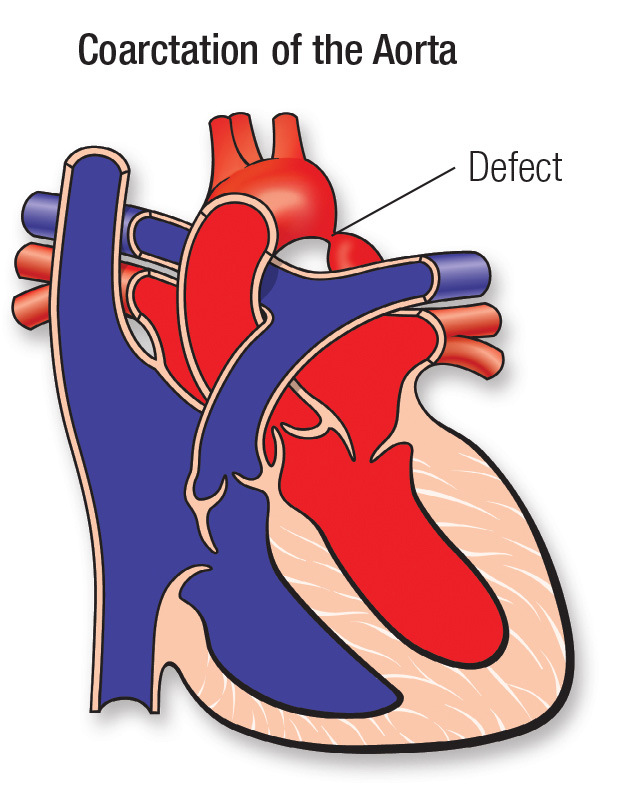
In this condition the aorta (the main artery that carries blood from the heart to the body) is narrowed or constricted.
This narrowing affects blood flow where the arteries branch out to carry blood along separate vessels to the upper and lower parts of the body. CoA can cause high blood pressure or heart damage.
What causes it?
In most children, the cause isn’t known. Some children can have other heart defects along with coarctation.
How does it affect the heart?
Coarctation obstructs blood flow from the heart to the lower part of the body. Blood pressure increases above the constriction. The blood pressure is much higher than normal in the left pumping chamber (left ventricle) and the heart must work harder to pump blood through the constriction in the aorta. This can cause thickening (hypertrophy) and damage to the overworked heart muscle.
How does the coarctation affect my child?
Usually no symptoms exist at birth, but they can develop as early as the first week after birth. A baby may develop congestive heart failure or high blood pressure.
If the obstruction is mild, the heart won’t be very overworked and symptoms may not occur. In some children and adolescents, coarctation is discovered only after high blood pressure is found.
What can be done about the coarctation?
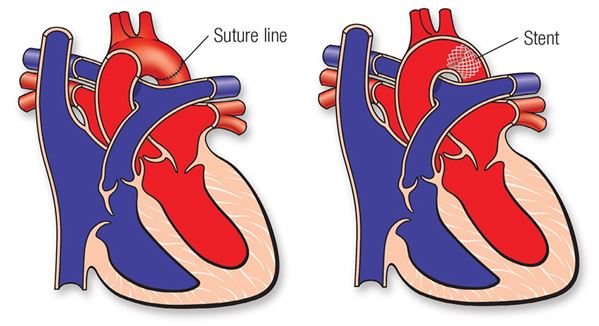
The coarctation obstruction can be relieved using surgery or catheterization.
Surgery is often used to repair coarctation. A surgeon doesn’t have to open the heart to repair the defect. It can be fixed in several ways. One way is for the surgeon to remove the narrowed segment of the aorta. Another option is to sew a patch over the narrowed section using part of the blood vessel to the arm or a graft of synthetic material.
Cardiac catheter balloon dilation and stent placement is also used, more commonly in older patients and in patients with recurrent coarctation after surgery. In this case the
balloon may stretch the area of narrowing while the stent provides stiff support to prevent the vessel from returning to the smaller size.
An infant with a severe coarctation should have a procedure to relieve the obstruction. This may relieve heart failure in infancy and prevent problems later, such as developing high blood pressure as an adult because of the coarctation.
What activities can my child do?
If the coarctation has been repaired, there is no important leftover obstruction or high blood pressure, your child may not need any special precautions regarding physical activity, and may be able to participate in normal activities without increased risk.
Some children with obstruction, hypertension, heart muscle abnormalities or other heart defects may have to limit their physical activity. Check with your child’s pediatric cardiologist about this.
What will my child need in the future?
The outlook after surgery is favorable, but long-term follow-up by a pediatric cardiologist is needed. Rarely, coarctation of the aorta may recur. Then another procedure to relieve the obstruction may be needed. Also, blood pressure may stay high even when the aorta’s narrowing has been repaired.
Problems you may have
High blood pressure is the most common problem adults have. It can be present even if your coarctation was successfully fixed. High blood pressure is more common if the coarctation was repaired after five years old. Patients treated in childhood are at risk for redeveloping the coarctation (recoarctation) and may require catheterization. Most patients with recoarctation of the aorta after initial repair usually don’t have symptoms, which makes regular assessment by a physician all the more important. Many times the area will renarrow to a degree, or other portions of the aorta may enlarge (aneurysms) with potential to rupture. These may need to be addressed with further intervention. Patients may develop coronary artery disease, leaving them vulnerable to heart attacks. There may even be an increased risk of having an aneurysmal blood vessel in the head.
