
Patient Voices
Ayesha
Healing the Heart, Preserving the Future
When four-year-old Ayesha (name changed) walked into the hospital holding her mother’s hand, few would guess that her tiny heart carried a silent burden from birth. Born with congenital heart disease, she had an Atrial Septal Defect (ASD)—a hole in the wall separating the upper chambers of the heart.
ASD is one of the most common congenital heart defects. In some children, it can close on its own. In others, it requires medical intervention. Ayesha’s parents—both school teachers—noticed that she tired easily, became breathless during play, and often lagged behind her friends. Like many parents, they hoped for a simple solution.
Doctors carefully evaluated her condition. While many ASDs today can be closed using a catheter-based device, Ayesha’s defect was not suitable for device closure due to its size and location. Surgery was the only definitive solution. For her parents, the word surgery was frightening. For a child so young, they worried not only about survival, but also about pain, long-term effects, and the emotional impact the experience might leave behind.
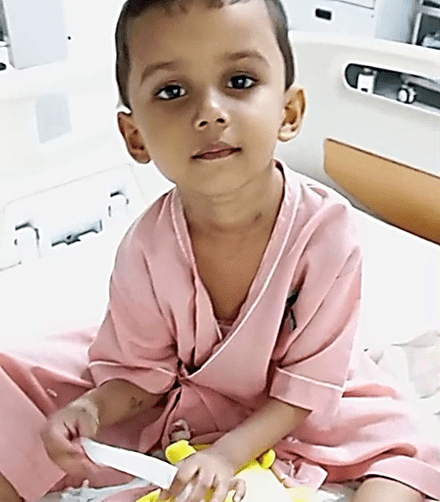
They were then referred to our team for Minimally Invasive Cardiac Surgery (MICS)—an advanced surgical technique that allows heart repair through a small incision on the side of the chest, without cutting through the breastbone. The operation was smooth and successful. We repaired the defect with precision, restoring normal blood flow and relieving the heart of unnecessary strain. Ayesha recovered quickly, returning to her playful self within days.
But for her family, one detail stood out with profound significance:
There is no visible scar on the front of her chest.
Traditional open-heart surgery often leaves a long, permanent scar across the chest. While lifesaving, such scars can become a lifelong reminder of illness—especially impactful for female patients. As girls grow, visible chest scars may affect self-esteem, body image, social confidence, and even future relationships. By avoiding a front-of-chest scar, MICS offers something beyond medical success. It protects a child’s psychological and social well-being. Ayesha will grow up without feeling “different.” She will not have to explain her scar at school, hide it in adolescence, or feel self-conscious as a young woman.
For a girl child, this matters.
Her parents often say that MICS did not just repair their daughter’s heart—it protected her future identity. As educators themselves, they understand how deeply confidence shapes a child’s life.
Today, Ayesha runs freely, laughs loudly, and dreams boldly. Her heart is whole. Her chest bears no visible mark of surgery. And her future is open—unrestricted by disease, fear, or stigma. This story is a reminder that modern cardiac surgery is no longer only about survival. It is about healing with compassion, preserving dignity, and allowing children—especially girls—to grow up with healthy hearts and unscarred confidence.
Prof. Dr. Md. Faizus Sazzad
(MBBS, MS, FCPS, FACS, FACC, FRCS, PhD),
Senior Consultant and Coordinator, Department of Cardiothoracic & Vascular Surgery (CTVS), UNICO Hospitals PLC, Dhaka
Safwan
The Story of a Child with a Single Ventricle: A Journey of Struggle, Treatment, and Hope
Today, I wish to share with you the long and arduous journey of our family, centered around a child suffering from a pediatric congenital heart condition. Before doing so, I believe it is appropriate to briefly introduce myself and my family. My name is Ibrar Alam. I am 55 years old and work as a faculty member at a private university. I have two sons. My elder son, Ayin Abrar, is 19 years old. He studies at a school and is scheduled to appear for his A-Level A2 examinations this year. My younger son, Safwan Abrar, is 11 years old and currently a fifth-grade student. Safwan is a patient with Single Ventricle Physiology. This narrative primarily focuses on his life, struggles, and medical journey. Birth and the First Shock Safwan was born on 15 September 2014 at Central Hospital, Green Road, Dhaka, via a cesarean section early in the morning. On the very first night after birth, we noticed something unusual—he was crying excessively, and his lips appeared slightly bluish. A pediatrician examined him that night and, using a stethoscope and clinical assessment, detected a heart murmur. An echocardiogram was advised the following day.
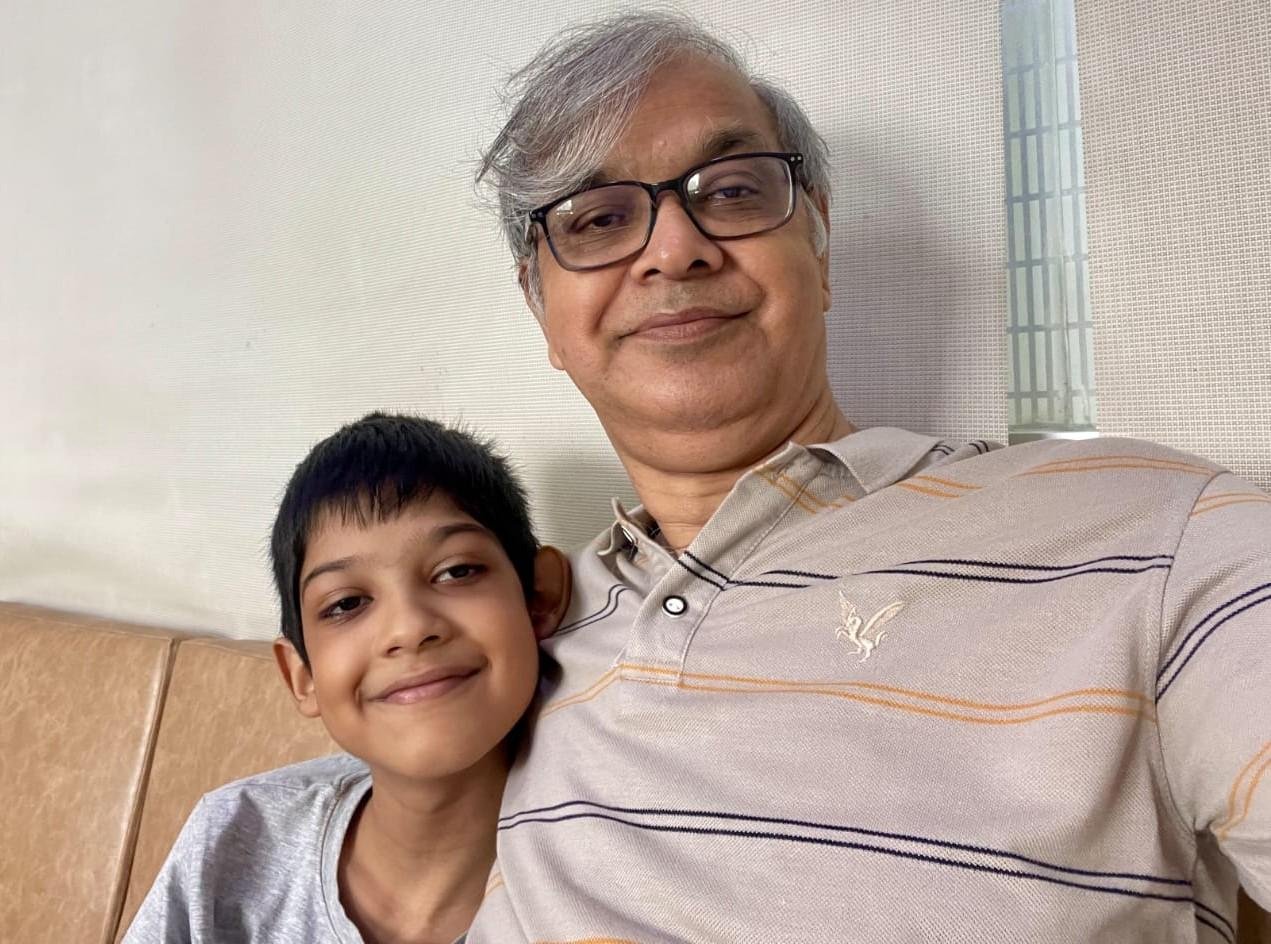
On 16 September 2014, we took him to LabAid Hospital, where the renowned cardiologist Brigadier General Dr. Nurunnahar Fatema performed the echocardiography. She informed us that Safwan would require palliative surgery, including a future Restelli surgery. That moment left us terrified. Online research only deepened our fear as we realized how complex such surgeries are.
Seeking a second opinion, we visited the National Heart Foundation. Through my friend Zayed—who had studied at Comilla Cadet College—we contacted Dr. Nurul Hasan, as they were alumni of the same institution. A repeat echocardiogram was performed by Dr. Jasmine Hossain, who confirmed that Safwan would initially require a BT Shunt, followed by Restelli surgery later. She referred us to the eminent pediatric cardiac surgeon Professor Dr. Sharifuzzaman.
At that time, pediatric cardiac care in Bangladesh was largely centered at the Heart Foundation in Mirpur. After reviewing all reports, Professor Sharifuzzaman advised that Safwan’s body weight was too low and recommended advanced treatment abroad, preferably in India.
Treatment in India
We decided to go to Fortis Escorts Heart Institute, New Delhi, under the care of world-renowned surgeon Dr. K. S. Iyer, upon Professor Sharifuzzaman’s referral. In March 2015, we reached Delhi. After comprehensive investigations including echocardiography and CT angiography, the medical team informed us that Safwan had multiple complex cardiac anomalies. Overall, he was diagnosed with Single Ventricle Physiology.
They explained that the final surgical decision—BD Glenn or bilateral shunt—would be made after opening the chest in the operating theater. A long-term treatment roadmap was also shared, and we were encouraged to seek second opinions if we wished.
Having already received strong reassurance about Dr. Iyer from Professor Sharifuzzaman, Dr. Jasmine Hossain, and Dr. Nurul Hasan, we placed our full trust in their judgment.
- First Surgery: BD Glenn
- Safwan’s diagnosis was:
- d-TGA with intact VSD and severe pulmonary stenosis
Large inlet VSD - One large MAPCA arising from the descending aorta
- Tiny muscular VSD at the apex
On 21 March 2015, Safwan successfully underwent BD Glenn surgery. He stayed in the ICU for about five days and remained hospitalized for over a month. He was discharged on 9 April 2015, with clear instructions that Fontan surgery would be required in the future. We were advised to continue regular follow-ups at the National Heart Foundation under Dr. Nurul Hasan’s supervision after returning to Bangladesh.
Follow-up in Bangladesh and Preparation
Back in Bangladesh, we maintained regular follow-ups with Professor Sharifuzzaman and Dr. Nurul Hasan. At that time, it was determined that Safwan was not yet ready for Fontan surgery; the appropriate age would be around three to four years.
Under the care of Dr. Jasmine Hossain and Dr. Nahruma, routine investigations—echocardiograms, ECGs, X-rays, and other tests—continued. Initially, follow-ups were conducted monthly.
Fontan Surgery: The Most Difficult Chapter
In March 2018, after cardiac catheterization, preparations began for Fontan surgery. On Professor Sharifuzzaman’s reference, Dr. Imam at Dhaka Shishu Hospital performed Safwan’s echocardiogram and angiogram.
Safwan was admitted to the pediatric unit of the National Heart Foundation on 7 May 2018, and surgery took place on 12 May 2018. Postoperatively, oxygen saturation did not improve as expected. An angiogram the following day revealed a blood clot in one lung. His chest had to be reopened to remove it.
Throughout this critical period, Dr. Sharifuzzaman, Dr. Nurul Hasan, and their entire team demonstrated extraordinary professionalism, dedication, and compassion. After nearly three weeks in the ICU, Safwan gradually improved and was discharged on 3 June 2018.
Warfarin and a Narrow Escape
Even after Fontan surgery, challenges continued. On the night of 6 June 2018, Safwan suddenly became critically ill. He was rushed back to the Heart Foundation, where tests revealed an INR of 25.7—a life-threatening condition. Immediate hospitalization and intervention saved his life.
By the infinite mercy of Allah and the swift, decisive actions of Dr. Nurul Hasan and his team, we survived this ordeal.
This long journey taught us that congenital heart disease is not merely a medical condition—it is a profound test of a family’s patience, faith, and emotional resilience. Despite limited resources, the dedication and humanity of some Bangladeshi physicians have given us renewed hope.
A heartfelt appeal to all patients on Warfarin: please remain extremely cautious, monitor INR regularly, and strictly follow medical advice. Even a small lapse can lead to grave consequences.
If our story raises awareness for even one parent, this effort will have been worthwhile.
Growing Up with Follow-ups
Over time, the interval between Safwan’s follow-ups gradually increased—from frequent visits to six-monthly, and sometimes annual reviews. Every year, I ensure that his echocardiogram, ECG, chest X-ray, and necessary pathological tests are completed and reviewed by Dr. Nurul Hasan at the National Heart Foundation.
By Allah’s grace, Safwan is doing well today. He attends school, speaks normally, studies, and socializes with friends. From the outside, no one would imagine the complex medical journey his heart has endured.
As he grows older, however, questions arise:
“Baba, what exactly is wrong with my heart?”
“Why do I have to go to the hospital so often?”
“Am I very sick?”
Answering these questions as a father is incredibly difficult. I try to reassure him without instilling fear, explaining that his heart is a little different and needs special care—and that his courage is what brought him this far.
Fontan Completion: More Than Five Years On
More than five years have passed since Safwan’s Fontan Completion surgery, officially termed:
Fontan Completion (Intra & Extra Cardiac) with a 19 mm PTFE Conduit and 4 mm Fenestration
During every follow-up, Dr. Nurul Hasan reassures us with the words:
“Alhamdulillah, the Fontan is functioning well.”
For a parent, those words bring indescribable peace.
Ray of Light: A Support Group That Became Hope
During a phone conversation, Dr. Nurul Hasan mentioned a highly active parent support group in Kerala for children with congenital heart disease. That conversation sparked a question—why not create something similar in Bangladesh?
This idea became reality on 20 April 2023, when Dr. Nurul Hasan himself created a WhatsApp group. From the very beginning, eminent pediatric cardiologist Dr. Somayra Nasrin joined and continues to support us.
Initially, a few parents—including myself, my wife, and Tarana Apa—joined the group. Tarana Apa’s daughter also suffers from a complex condition—Single Ventricle / Tricuspid Atresia Physiology—and is still awaiting Fontan surgery. Her relentless efforts and compassionate networking helped the group grow rapidly.
Later, renowned pediatric cardiologist Dr. Rezwana Rima joined. Gradually, with the combined participation of physicians and parents, the group evolved into a strong support platform, now consisting of 68 members.
We meet at least once a month to discuss the children’s health, future treatment plans, mental and social development, and quality of life. Three pediatric cardiologists regularly guide us with invaluable advice.
Dr. Nurul Hasan named the group “Ray of Light”—and true to its name, it has become a genuine source of hope.
Children Heart Trust Bangladesh (CHTB): Expanding the Mission
At a seminar, I met Professor Dr. Shamsuddin, a distinguished pediatric cardiac surgeon actively involved with Children Heart Trust Bangladesh (CHTB)—a humanitarian organization dedicated to supporting financially underprivileged children with congenital heart disease.
He explained that every year, a large number of children in Bangladesh are born with heart defects, yet many are deprived of treatment solely due to financial hardship. CHTB was established to address this reality.
At his invitation, I attended several seminars with Safwan. Professor Shamsuddin also expressed his desire to integrate our Ray of Light group into CHTB’s broader initiatives—a mission we wholeheartedly support.
Children Heart Link (International)
Children Heart Link is an international organization working globally for underprivileged children with congenital heart disease. They visited Bangladesh, created a documentary featuring Safwan at our home, and expanded their activities at the National Heart Foundation. We remain deeply grateful for their support.
Final Words: Hope Is Our Strength
Despite limited technology and a shortage of specialists, hope persists. Recently, we learned that Transcatheter Fontan Completion has been successfully performed at Apollo Hospital, India, under the leadership of Dr. C. S. Muthukumar and Dr. Shiva Kumar. Dr. Rezwana Rima informed our Ray of Light group that she is actively communicating with experts to bring this technology and training to Bangladesh.
This news is a tremendous source of hope.
We firmly believe that if the state, civil society, NGOs, corporate entities, international organizations, physicians, and parents work together, pediatric cardiac care in Bangladesh will advance significantly. Perhaps one day, even heart transplantation—currently the only long-term solution for many Fontan patients—will become a reality here.
With the hope that our children will smile, that they will lead healthy, normal lives like other children, I conclude my story.
Prof. Ibrar Alam
Dean, Faculty of Business Studies
The Millennium University
