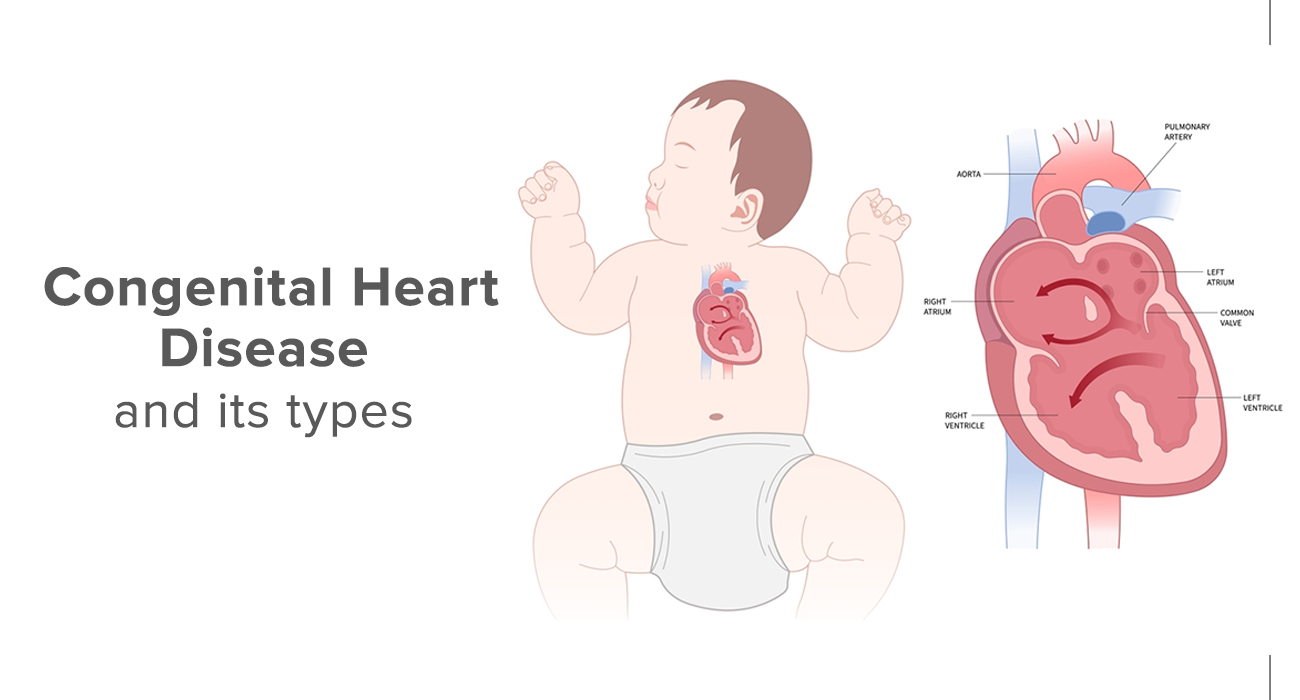

Congenital Heart Disease (CHD)
Congenital Heart Disease
Congenital heart defects (CHD) refer to structural or functional abnormalities of the heart that are present at birth. These may involve defects of the heart valves, openings between the atrial or ventricular chambers, narrowing of blood vessels (stenosis), abnormalities of the heart muscle, or other malformations that can be life-threatening.
CHD occurs when the heart or the major blood vessels fail to develop normally during early fetal life, often shortly after conception—frequently before the mother realizes she is pregnant. These defects arise from errors during embryonic heart development.
Childhood heart defects can be classified into several groups, including improper formation of cardiac structures, abnormal positioning of the heart or vessels, underdeveloped components, and disturbances of heart rhythm. While most congenital heart defects are detected early in life, some may remain undiagnosed for years. The severity varies widely, ranging from simple conditions such as small holes between heart chambers to complex malformations, including the absence of one or more chambers or valves.
Depending on the type and severity, congenital heart defects may or may not significantly impair blood circulation. However, individuals with CHD have an increased risk of developing associated complications later in life, such as pulmonary hypertension, cardiac arrhythmias, and infective endocarditis.
A recent multicenter echocardiography-based screening study in Bangladesh reported that congenital heart defects affect approximately 18.9 per 1,000 live births (about 1.9%). Findings from hospital-based and neonatal studies indicate even higher prevalence rates; for instance, one tertiary-level hospital study documented a rate of nearly 25 per 1,000 live births (around 2.5%). Most children with simple congenital heart defects survive into adulthood and are able to live normal or near-normal lives, although their exercise tolerance may be somewhat reduced. In contrast, more complex heart defects are often associated with ongoing physical limitations. Additionally, some children with congenital heart disease may experience developmental delays or learning challenges.
Healthcare professionals play a crucial role in providing guidance and reliable information. Various educational resources are also available to help patients and families understand the different types of congenital heart defects, diagnostic investigations, and available treatment options:
- Learn about the Healthy Heart
- Common Types of Congenital heart defects (CHD)
- Atrial Septal Defect (ASD)
- Ventricular Septal Defect (VSD)
- Patent Ductus Arteriosus (PDA)
- Tetralogy of Fallot (TOF)
- Total Anomalous Pulmonary Venous Connection (TAPVC)
- Coarctation of the Aorta (CoA)
- Atrioventricular (AV) Canal defect
- Transposition of the Great Arteries (TGA)
- Others – Rare & Complex Congenital Defects:
- Ebstein’s Anomaly
- Hypoplastic Left Heart Syndrome
- Pulmonary Atresia
- Pulmonary Valve Stenosis
- Single Ventricle Defects
- Tricuspid Atresia
- Truncus Arteriosus
Source: All health and medical information on this website has been reviewed and approved by Child Heart Trust Bangladesh (CHTB) and is based on scientific research and published evidence, in association with the American Heart Association.